Cherry Hills Village Has Surprisingly Little Public Land. One 17-Acre Farm Is a Quarter of It.
August 13, 2026
August 13, 2026
Ask most people in Cherry Hills Village how much public land the city actually owns and they will guess high. Big lots, mature trees, horses grazing behind fences: the whole place reads like open country. But drive past the private acreage and the shared, walkable, anyone-can-show-up public land shrinks fast. Quincy Farm alone accounts for 17.5 acres of public open space, representing 24 percent of the city's total public open space and parkland. Do the arithmetic and that puts the entire public inventory at somewhere around 73 acres, spread across a city of large private estates. One farm, gifted by one family, carries a quarter of it.
That fact alone would make Quincy Farm worth paying attention to. What's different right now is that the farm has come through a multi-year stretch of changes that quietly made that quarter-share of public land bigger, better maintained, and more used than it has ever been.
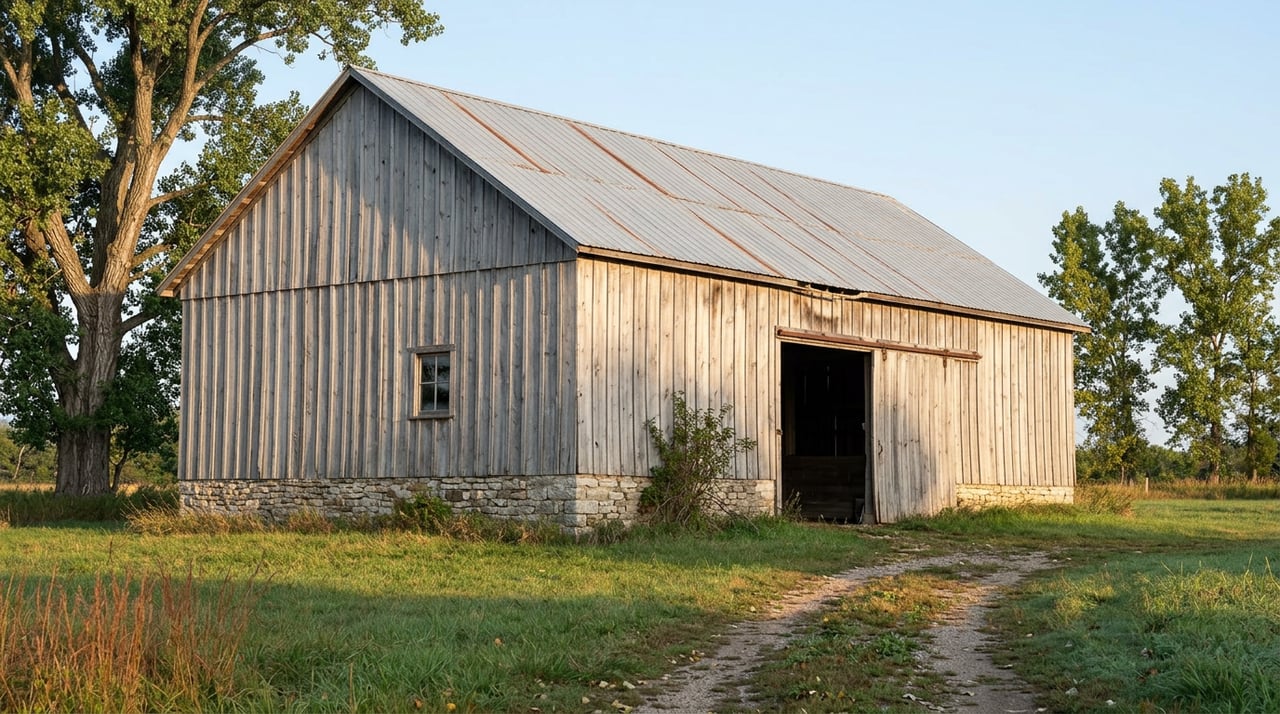
Quincy Farm was donated to the City of Cherry Hills Village by Catherine "Cat" Anderson, who placed the property under a conservation easement to permanently preserve its natural and rural heritage. The farm is listed on the National Register of Historic Places and includes a 1930s barn along with the only 19th-century farmhouse in the area. It sits directly on the High Line Canal, which is how most residents encounter it: not by driving up to a gate, but by walking or biking the canal trail and crossing a bridge into pasture that has looked more or less the same for a century.
There is a smaller, easy-to-miss detail worth knowing if you visit. A sculpture by artist Robert Mangold sits on the grounds, part of the Anderson estate's legacy even though it was donated separately from the land itself. It is the kind of thing you only notice once someone tells you it is there, which is true of most of what has changed at Quincy Farm lately.
For years, the practical reality of Quincy Farm was that the barnyard and farmhouse side, east of the canal, was the side you could actually visit. The pasture and gardens to the west stayed largely off the daily-use map. The city and Cherry Hills Land Preserve had announced a quarter-mile pedestrian trail on the west side, designed to let residents enjoy the natural landscape and the vistas unique to that part of the property.
That trail is no longer a future plan. Today, both the east and west sides of Quincy Farm are open every day, sunrise to sunset. Quincy Farm's own updates confirm the west side trail is now open on that same daily schedule. For a property that spent years as two unequal halves, that is not a small adjustment. It roughly doubles the portion of the farm a resident can walk through on any given evening without needing to time a visit around a program or an open house.
The other headline change is architectural. The Big Barn renovation project was completed in 2025, alongside the start of a separate pond rehabilitation project to improve wildlife habitat. The barn's reopening was not a quiet ribbon-cutting. HawkQuest brought live raptor presentations, including an eagle, hawk, falcon, and owl, plus a rotating cast of visiting chickens, goats, and a horse named Petey. Mile High Sliders, one of Denver's food trucks, served the crowd, and kids lined up for nature-inspired face painting. Naturalist Kate Hogan returned to share her knowledge of local birds and mammals, a program she has run at the farm before.
That single event is a decent preview of what programming at Quincy Farm actually looks like now that the barn is usable again. It is not a museum piece behind a rope. It is a working community space that hosts kids' crafts, adult workshops, and wildlife education on a regular calendar.
Renovations and open trails are one kind of evidence. Attendance is another, and this is where the story gets more interesting than "the farm got nicer this year."
In 2024, Cherry Hills Land Preserve held 23 education programs and open houses and welcomed 1,343 visitors to the farm, up from 800 the year before. By 2025, that number climbed again: 27 educational programs brought 1,620 visitors to the farm, the same year CHLP helped fund the renovation of the historic 1934 barn.
Line those three years up and the trend is not subtle. Visitor traffic doubled in two years, right as the farm's usable footprint and its indoor programming space both expanded. That is not a coincidence of timing. It is what happens when a quarter of a city's public land goes from partially accessible to fully accessible in the same stretch of time its central building goes from closed for construction to open for events.
If you have not been to Quincy Farm recently, here is what a typical season of programming includes, based on the farm's own recent history:
A few practical notes that will save you a wasted trip. The east side of Quincy Farm is open for visitation from sunrise to sunset every day, accessible from the High Line Canal trail by crossing the bridge over the canal, or by walking up the bike path along Quincy Avenue. The street address is 4450 E. Quincy Ave. The west side keeps the same daily sunrise-to-sunset hours and the same access points.
Beyond one accessible parking space, there is no parking available on site, so plan to arrive on foot or by bike. Dogs are not permitted anywhere on the property, and visitors are asked to stay on the trail at all times. Buildings, including the newly renovated barn, are not open to the public except during scheduled programming, so a walk-up visit means pasture and gardens, not barn tours, unless there is an event on the calendar. Bicycles are not permitted on the farm itself, so lock up before you cross the bridge.
Cherry Hills Land Preserve, the nonprofit that runs the farm's programming in partnership with the city, has been doing this work since 2005, which is worth remembering the next time a workshop or a bird walk shows up on a community calendar. This is not a new initiative finding its footing. It is a two-decade project that recently finished one of its more visible chapters.
None of this changes how much private acreage sits behind the fences on any given Cherry Hills Village street. It does change how much of the city's shared land you can actually walk through on a Tuesday evening, and today, for the first time in the farm's history, that answer is all of it.
If you're settling into Cherry Hills Village and want a local's read on the neighborhoods, parks, and details that don't show up in a listing, Stephanie Watanabe would love to help. Let's Connect.
Stay up to date on the latest real estate trends.
Whether you're buying your first home, selling a longtime property, or exploring your next investment, Steph Watanabe is committed to making the process seamless and rewarding. With local market expertise, personalized guidance, and a client-first approach, Steph takes the time to understand your goals and provide honest advice every step of the way.
STEPH WATANABE
4643 S Ulster Street Suite 500 Denver, CO 80237